Boilers and heating
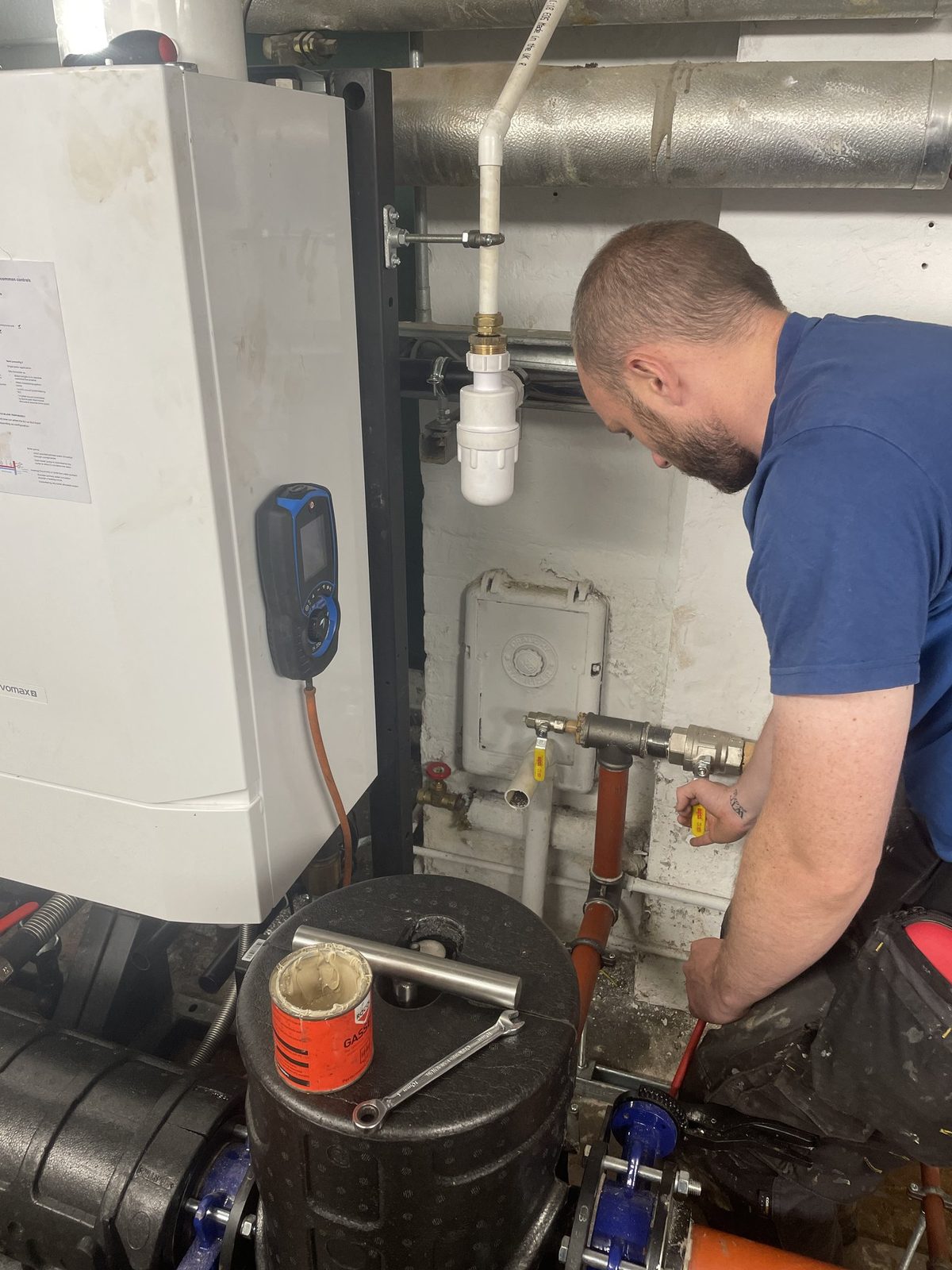
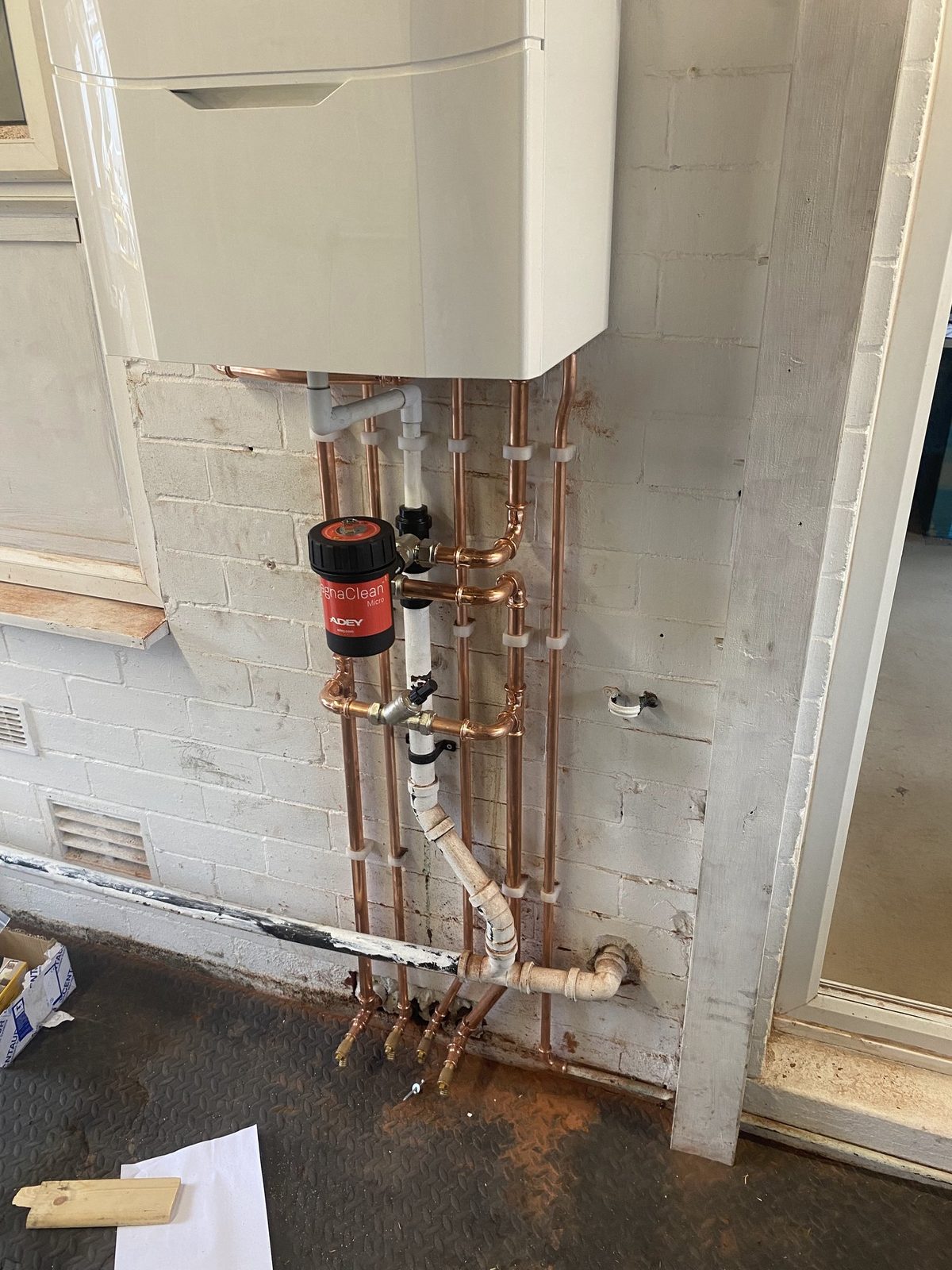
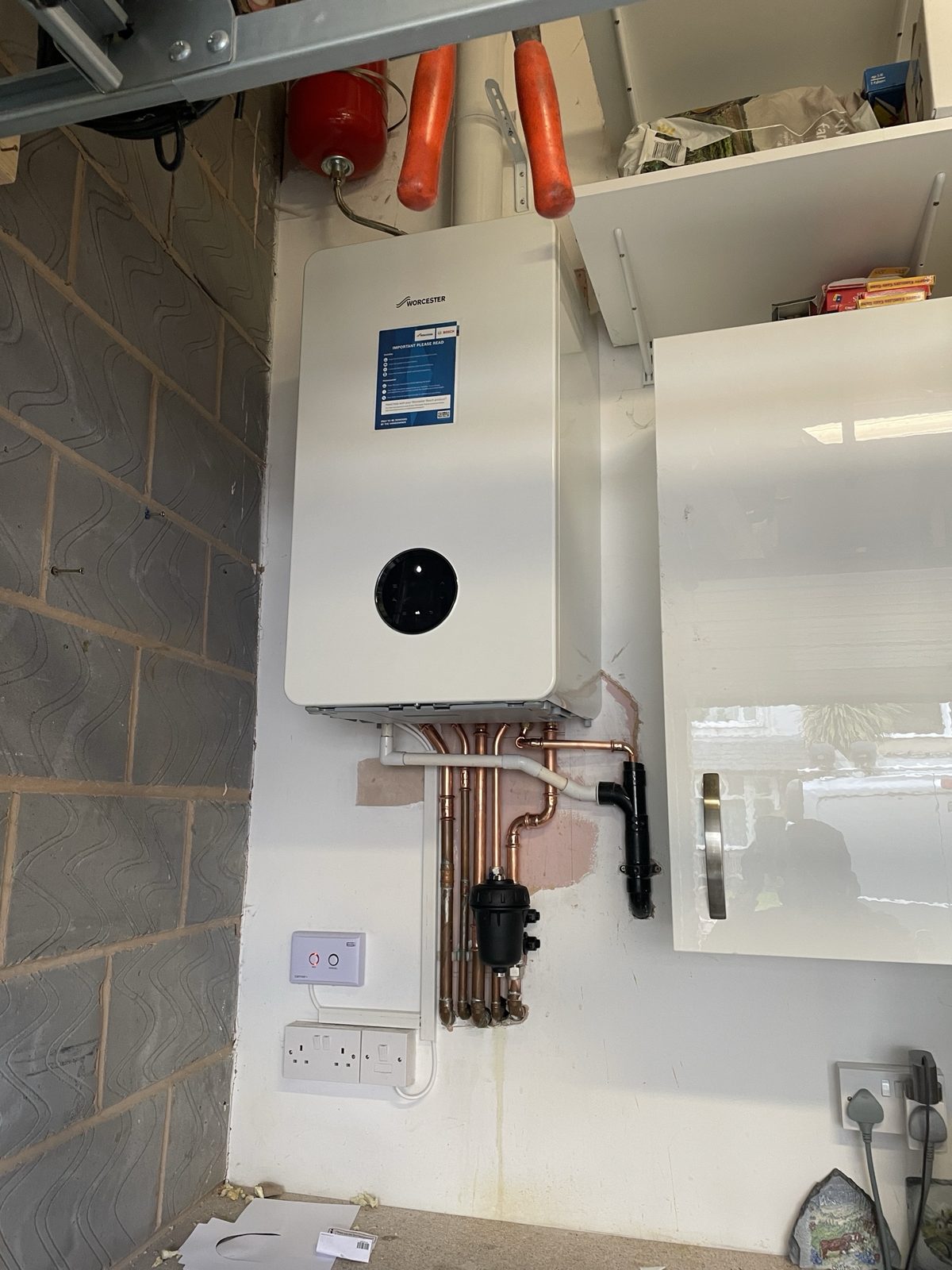
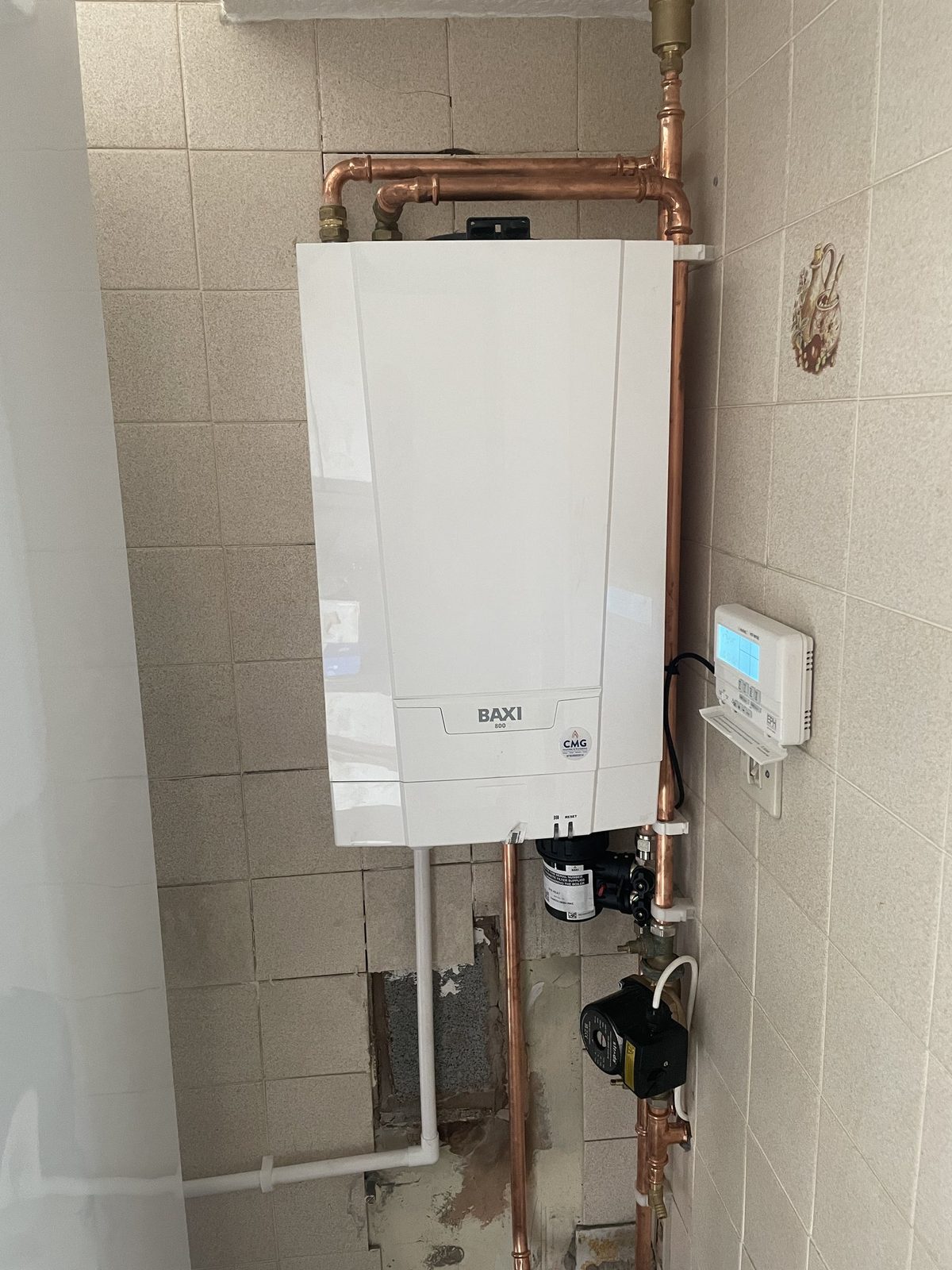
Four of the photographs above are boiler work — a Baxi 800 combi, a Worcester Bosch in a utility room, and installs finished in copper with a magnetic system filter on the return. The filter matters more than most people realise. It catches the black iron oxide sludge that wrecks pumps and blocks radiators from the bottom up, and manufacturers increasingly expect one to be fitted.
A boiler swap done properly means the system is flushed before the new appliance goes on, the gas supply is checked for the new boiler’s rate rather than assumed, the condensate is run so it cannot freeze in January, and the job is registered with Gas Safe and Building Control. You get the paperwork on the day, not a fortnight later. I am an accredited installer with Baxi, Worcester Bosch and Ideal.
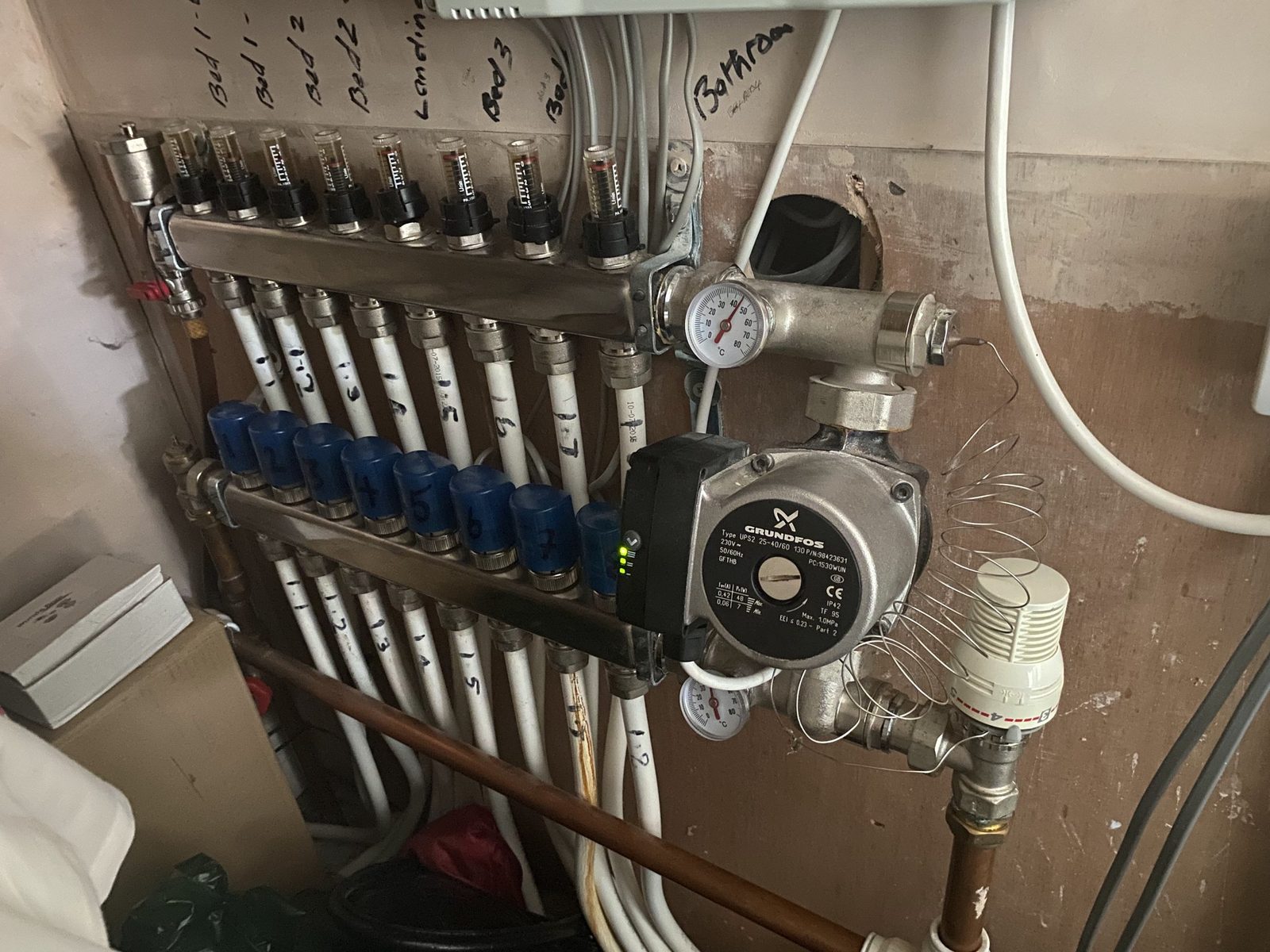
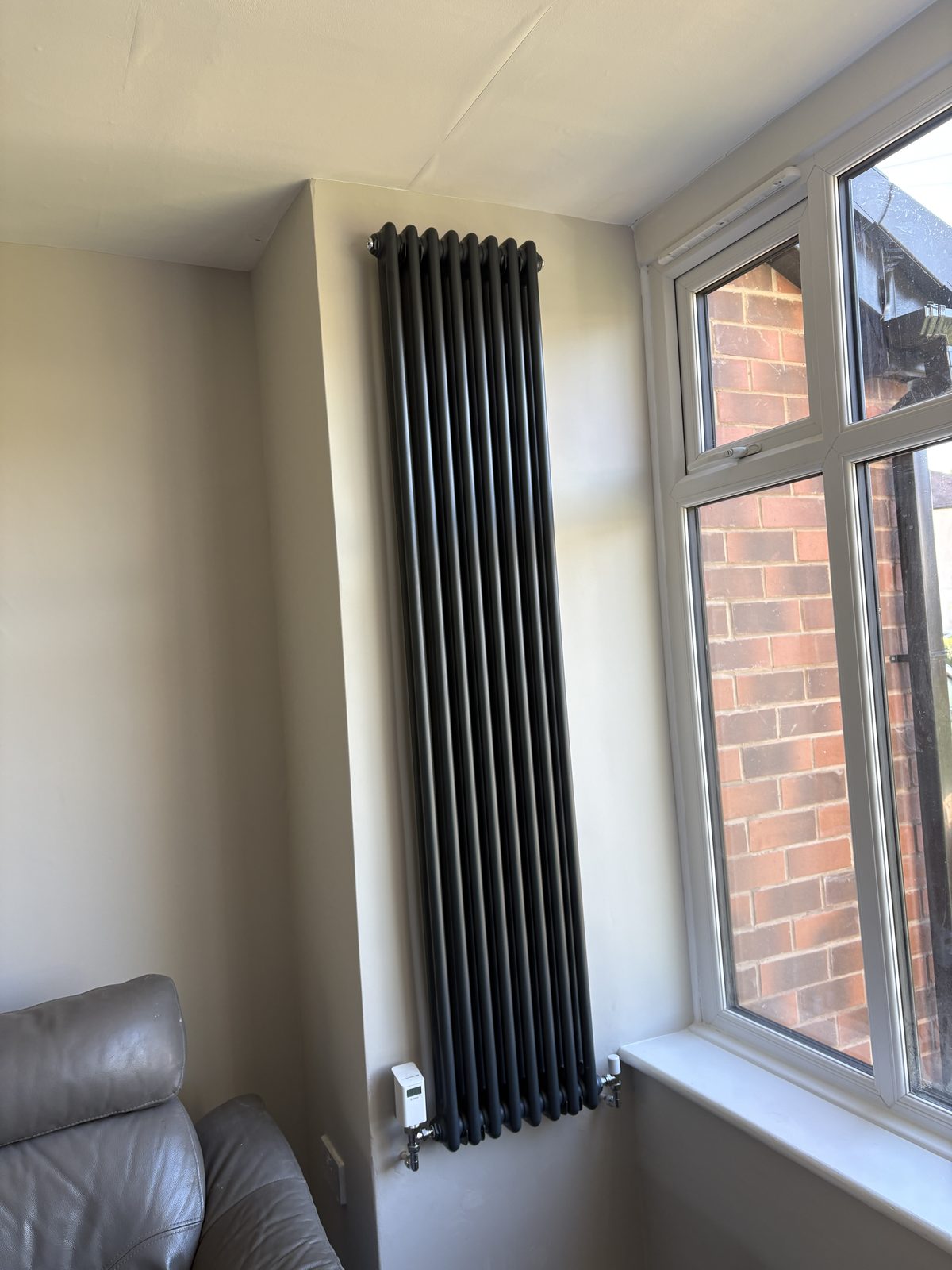
There is also a tall anthracite column radiator on a smart thermostatic valve, and an underfloor heating manifold with every circuit labelled, the flow rates set room by room and each actuator tested against its own thermostat. Manifolds are worth doing neatly, because sooner or later somebody has to balance them.
Bathrooms and shower rooms
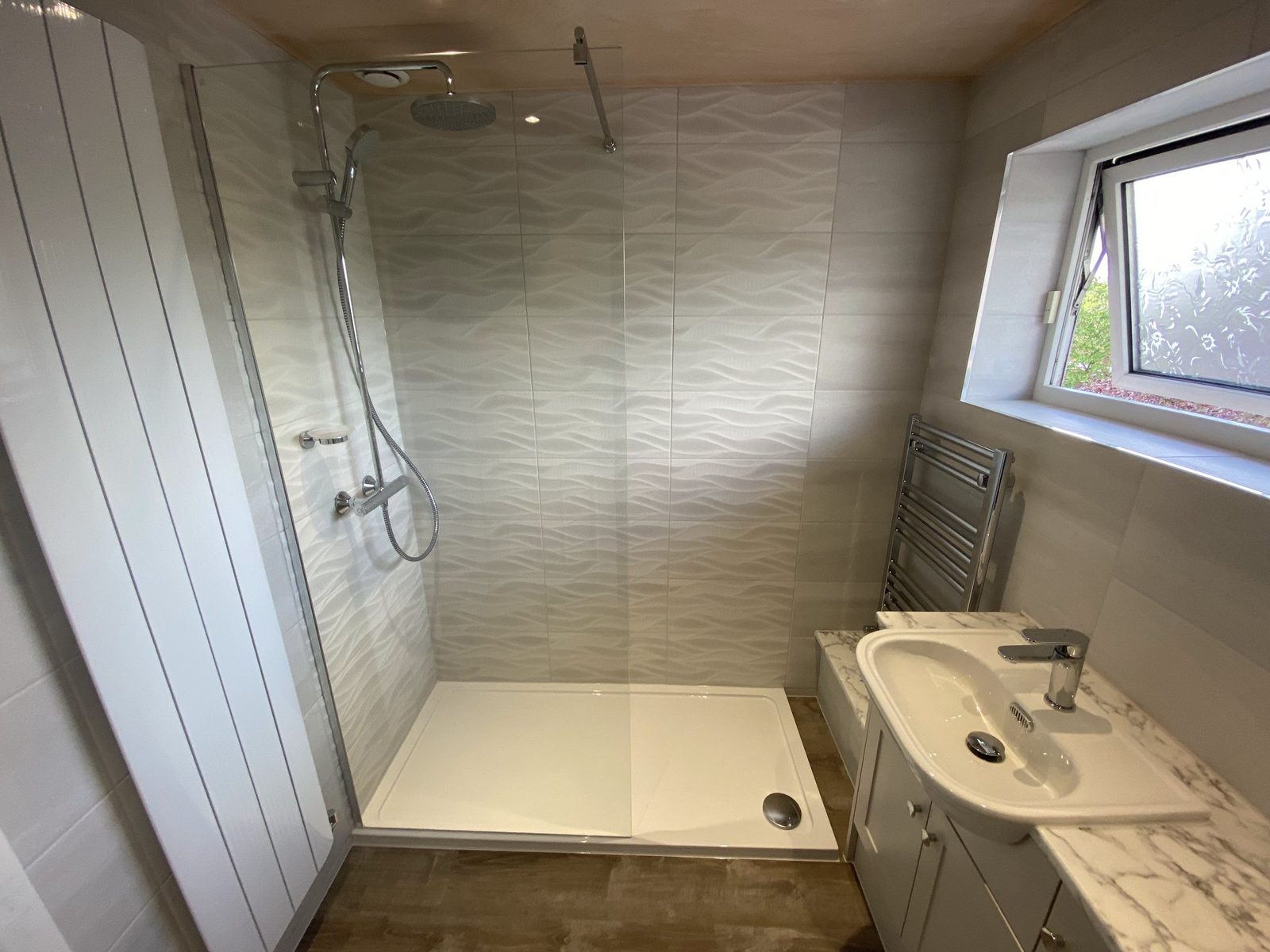
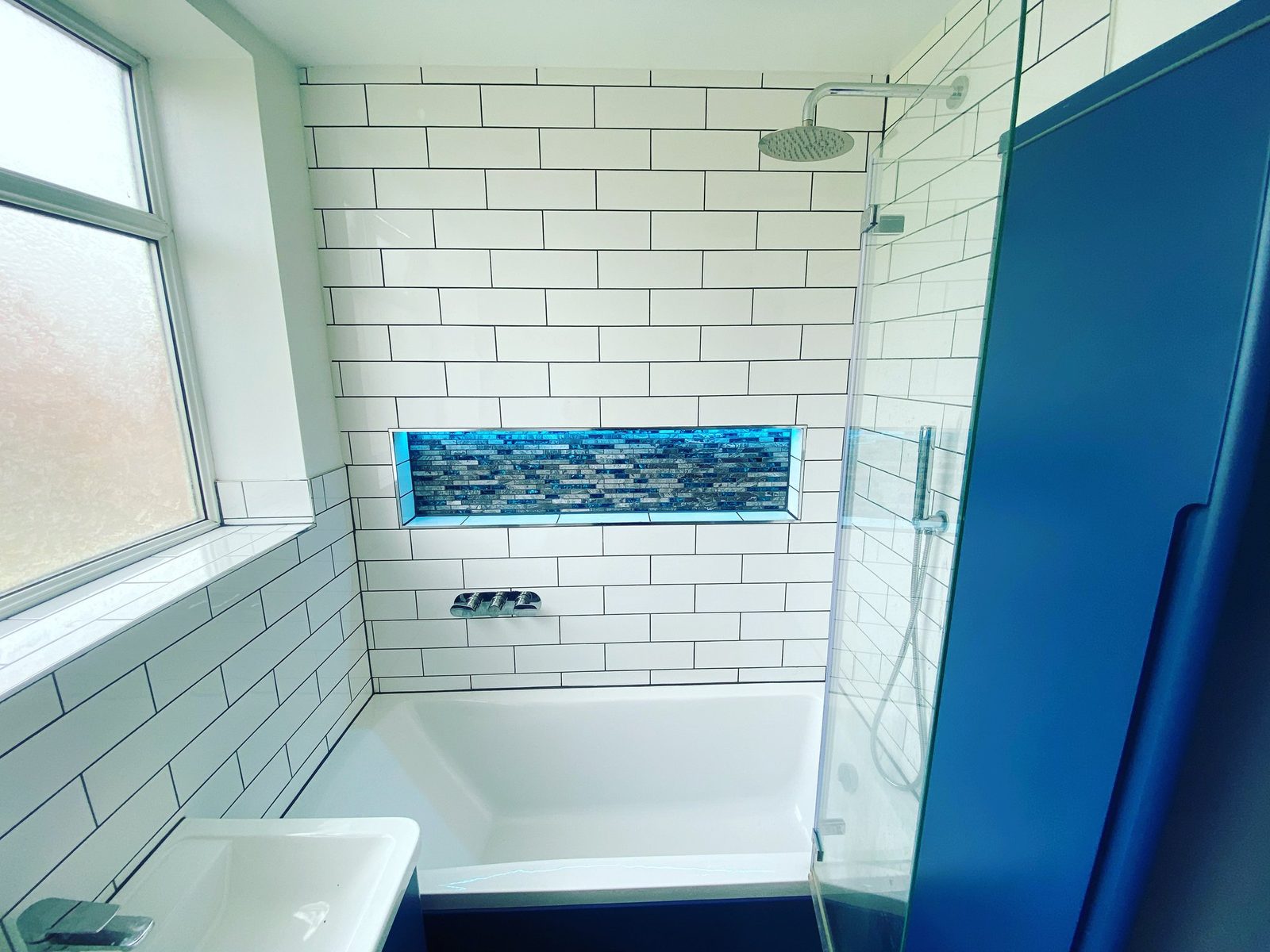
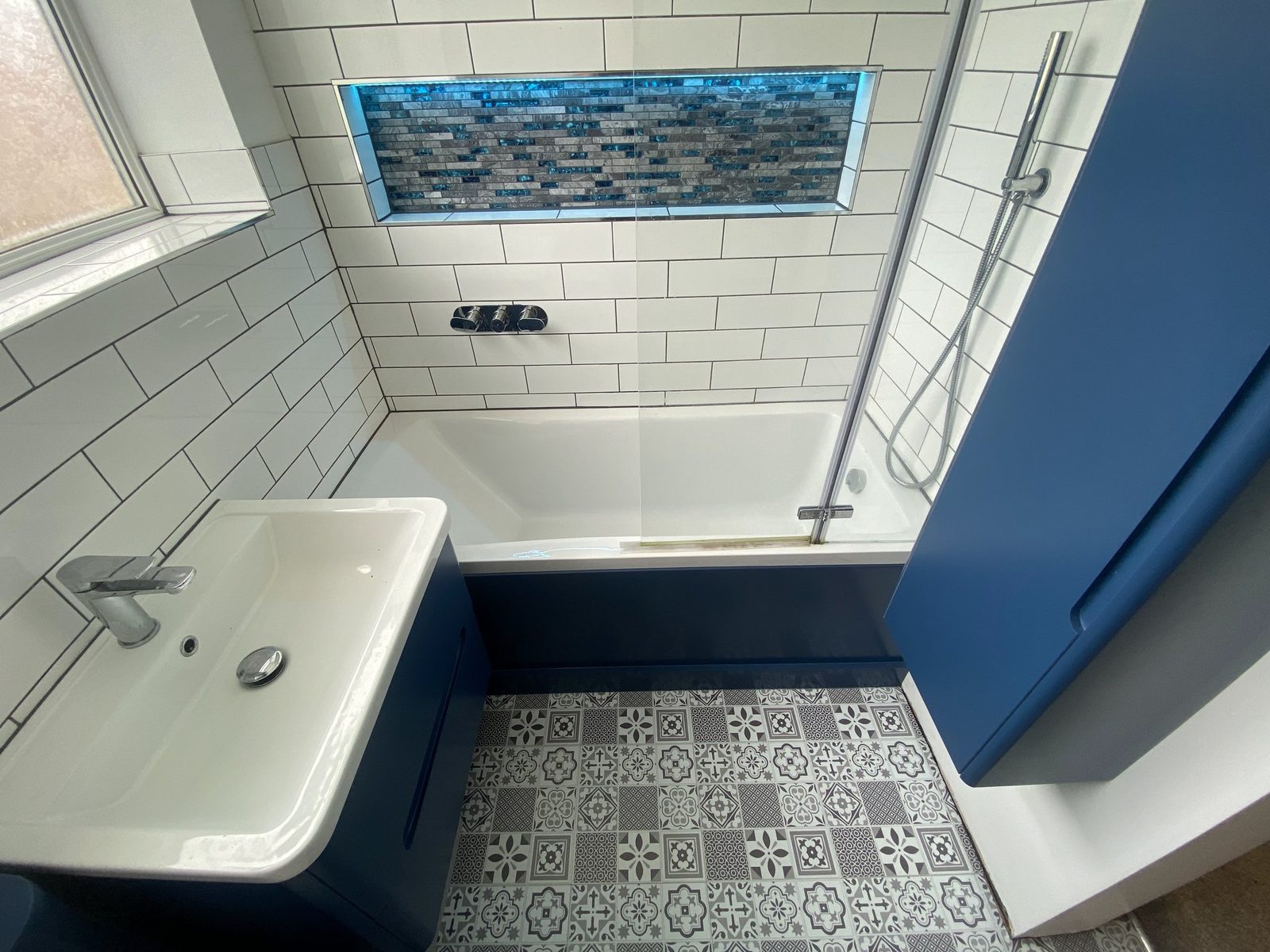
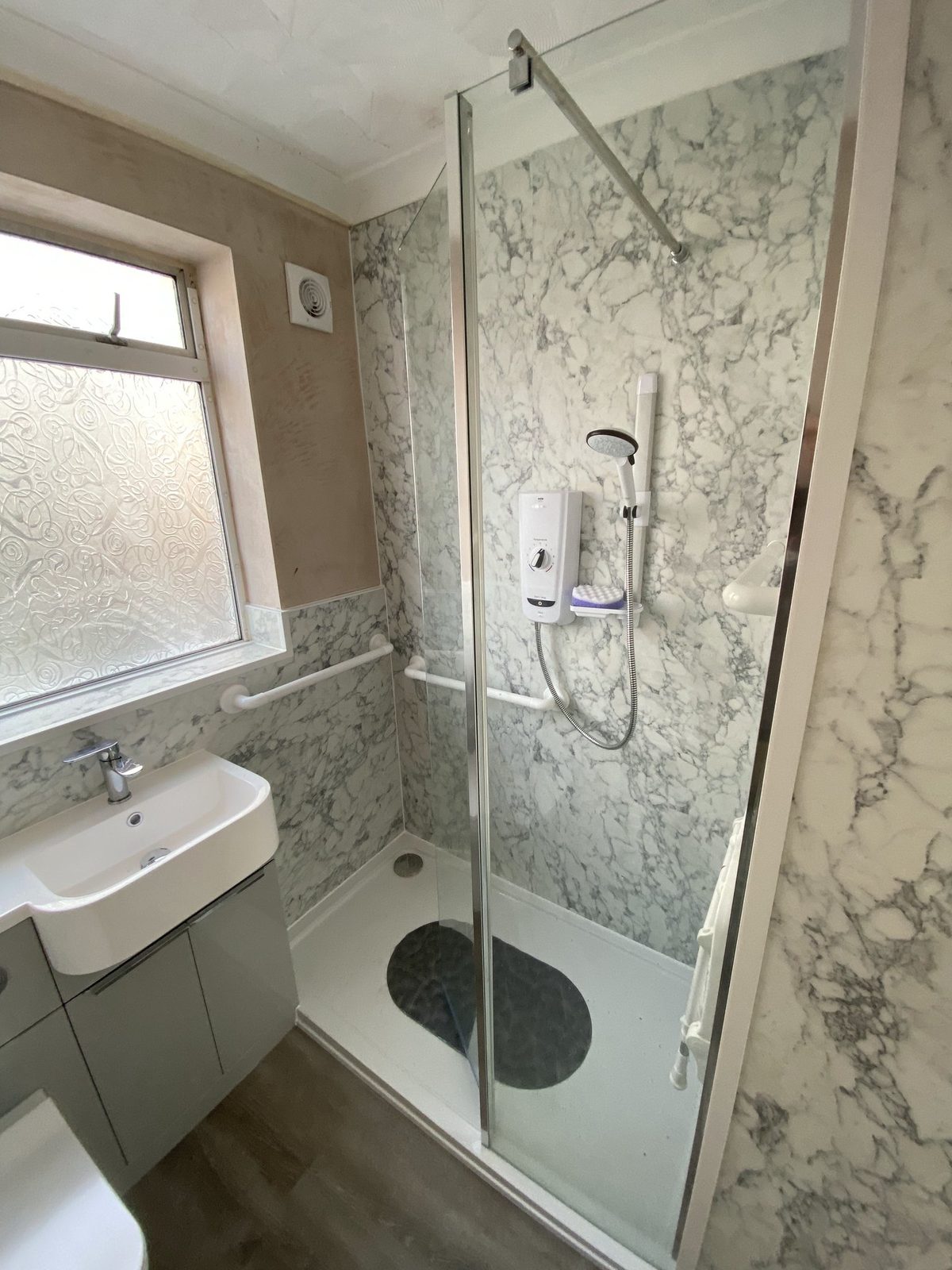
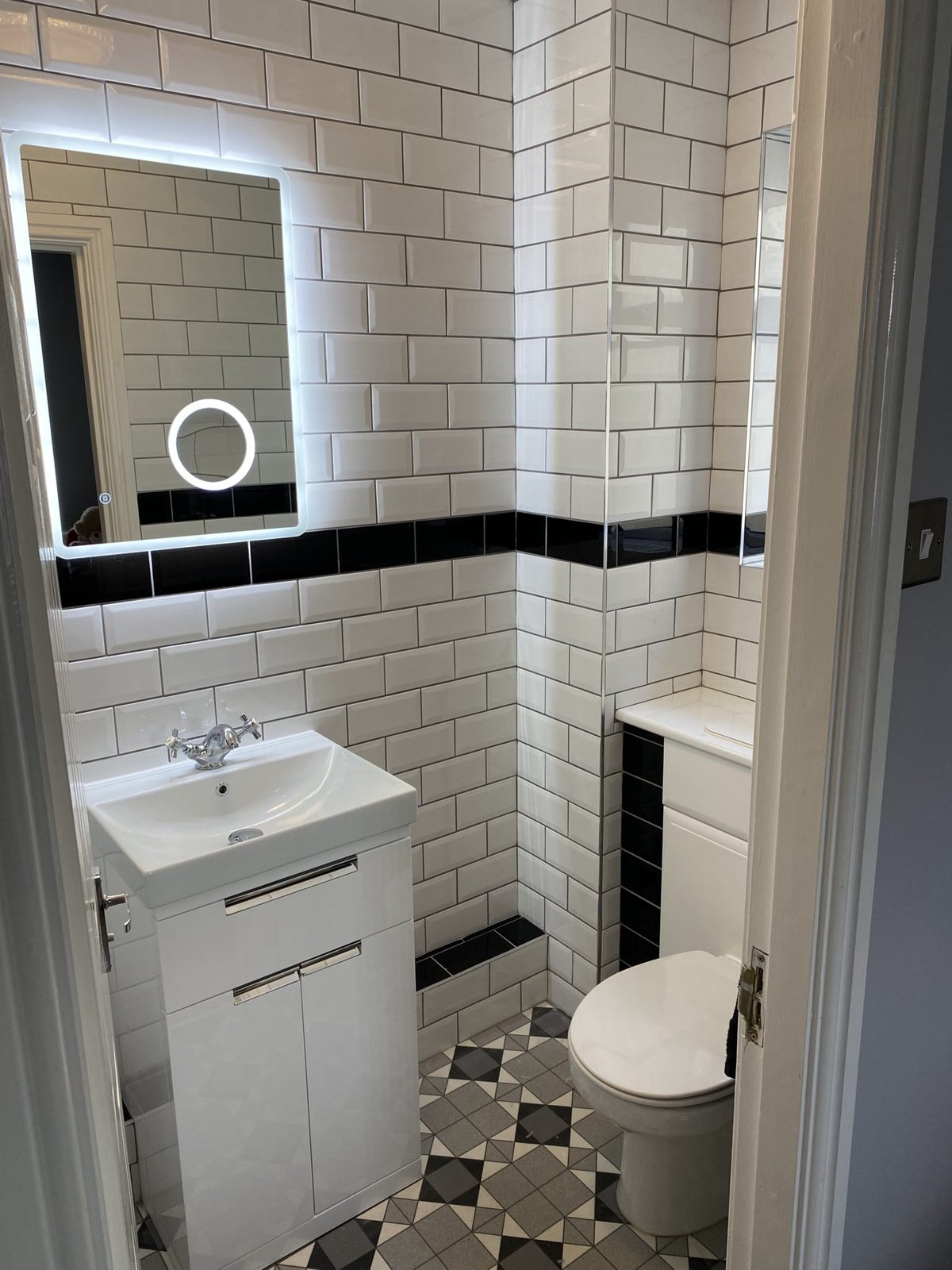
Five bathrooms are shown here: a walk-in shower with wave-effect tiling and a marble-top vanity, a white metro-tiled bathroom with an illuminated mosaic niche, one with navy vanity units and patterned floor tiles, a monochrome scheme with a black border course, and an accessible shower room with grab rails and marble-effect wall panels.
A bathroom is a plumbing job wearing a decorating job. The parts that decide whether it lasts are the ones nobody sees afterwards — the fall to the waste, the tanking behind the tile, and pipework fixed so it cannot move and start knocking. Showers and baths are tanked for a minimum ten-year leak-free performance. Niches are set out before the first tile goes on, so the courses run through them instead of around them.
The accessible shower room is worth a word on its own. Grab rails have to go into something solid, which means the timber goes in at first fix — not screwed to a plasterboard wall and hoped for.
Commercial and church work
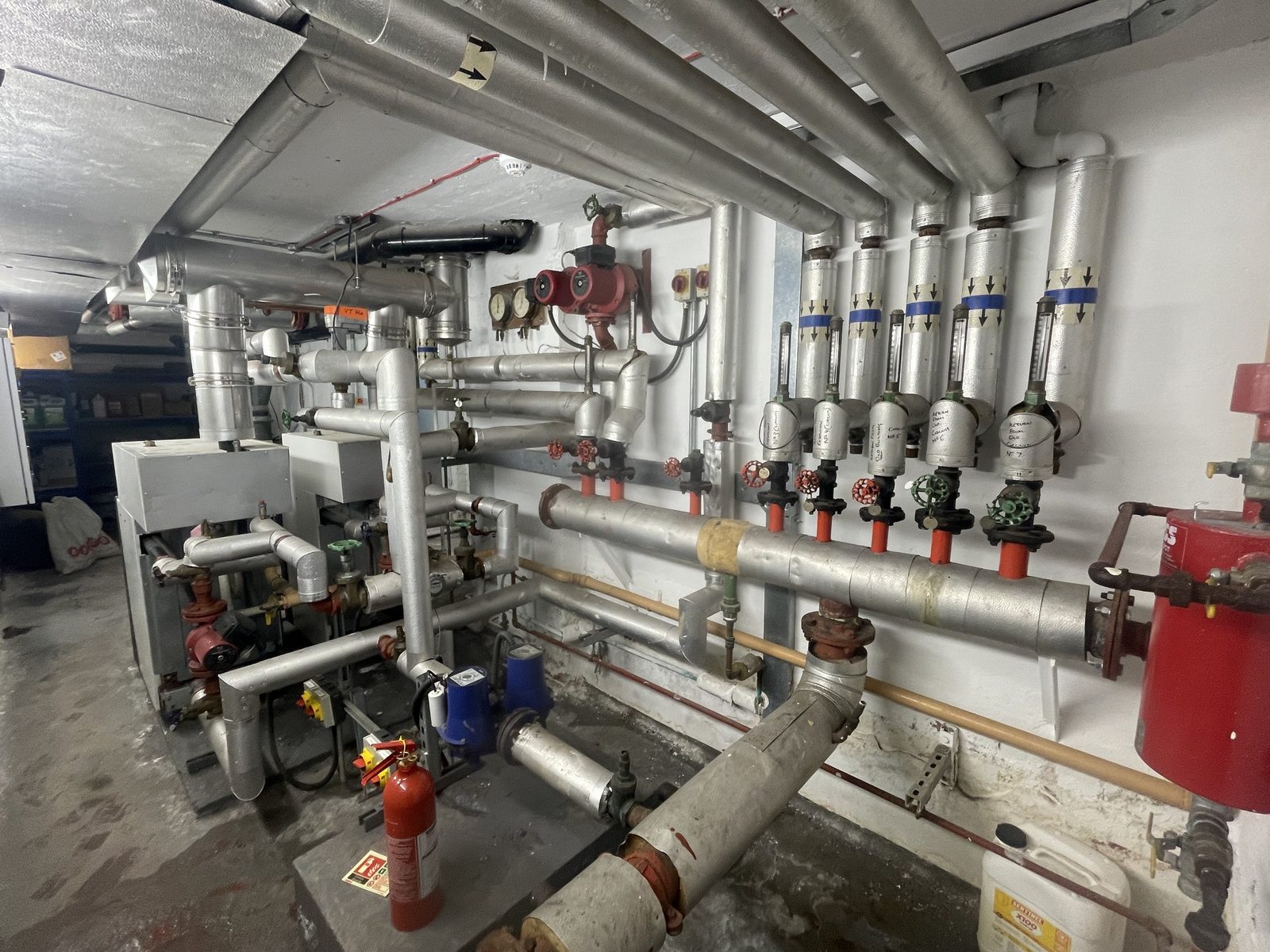
Two of the photographs are non-domestic: a commercial boiler being serviced with a flue gas analyser, and a plant room with its pipework and circulation pumps. Commercial plant needs the same discipline as a domestic boiler and a good deal more paperwork — combustion analysis, flue integrity, gas rate, safety devices, and a written record the building owner can hand to an insurer or an inspector.
Plant rooms are also where you find out whether the last person cared. Labelled, valved and accessible means the next fault can be isolated in a minute rather than an afternoon.
Alongside homes and landlords I work for businesses, and for churches and community buildings — chapels, halls and similar — where the heating is usually a commercial boiler, radiant tube heaters or warm-air units.
What these jobs have in common
One person quoted them and one person did them. CMG is run by me, so the person who priced your job is the person standing in your house doing it. On bathrooms the tiling goes to a tiler I have worked with for years, and I stay responsible for the finished room either way. If something is not right afterwards, you ring me and I come back.
Gas Safe registered, number 917962, and CIPHE registered, membership 129130. Working in and around Bolton since 2021.